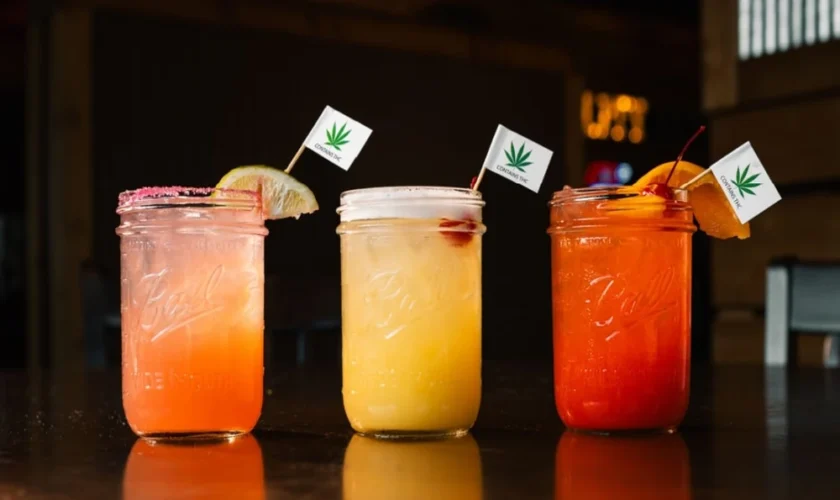
Travelling with THC drinks by state produces a different legal answer at every state line a journey crosses. BudPop thc drinks and alcohol comparisons highlight one consistent distinction that matters at every transit point: THC drinks carry compound classification requirements that alcohol does not, and those requirements shift independently from alcohol open container rules as a vehicle or traveller moves through different state frameworks. A THC drink legal in the departure state enters a completely different classification picture the moment it crosses into a state where cannabis-derived beverages carry controlled substance status. Mapping that picture before the first mile or the first checkpoint is what keeps every stage of a THC drink journey legally straightforward.
Travelling with THC drinks
Travelling with THC drinks introduces a dual compliance requirement that most travellers have not worked through before departure. State cannabis classification governs what the product is. Open container law governs where it can be within the vehicle while travelling. Both apply independently, and satisfying one does not satisfy the other. Cannabis-derived THC drinks carry a Schedule I classification under federal law at every airport security perimeter, federal transit point, and border crossing, regardless of what the departure state permits at retail. Hemp-derived THC drinks formulated within the federal delta-9 THC threshold hold a different federal classification and move through federal jurisdiction points under the hemp beverage framework. That source distinction is the first variable a traveller confirms before packing any THC drink for a journey that crosses state lines or passes through federal jurisdiction. Sealed original manufacturer containers satisfy open container requirements in states where cannabis open container rules mirror alcohol law.
What’s legal by state
State-by-state legal standing for THC drinks follows four distinct frameworks that apply independently at every state line a journey crosses.
- Recreational cannabis states permit possession and transport of THC beverages within state-specific quantity limits. Open container rules in most of these states restrict accessibility within the passenger compartment while the vehicle is in motion, and THC drinks stored in sealed packaging in the trunk satisfy that requirement where the rule applies.
- Medical cannabis states present a narrower position for travellers. Out-of-state travellers carrying THC drinks purchased elsewhere do not carry the same legal standing as in-state registered patients, and the product enters that state’s controlled substance framework at the border regardless of purchase origin.
- Restricted states apply full controlled substance classification to cannabis-derived THC drinks from the state line forward. Hemp-derived beverages within the federal threshold move through restricted states under a different framework, though individual state hemp legislation varies and recent updates may apply additional restrictions beyond federal compliance.
- Transit states apply their own framework independently for the full duration of the crossing, and that independent application covers the most commonly overlooked legal exposure point on any multi-state THC drink journey.
Travelling with THC drinks by state rewards a preparation sequence built around compound source confirmation, state-by-state classification review, open container compliance for every state on the route, and quantity verification against the most restrictive possession limit the itinerary presents. Each variable applies independently at every state line, and travellers who address all of them before departure move through every crossing with the legal clarity that state-specific THC drink travel requires.